

Nearby Attractions
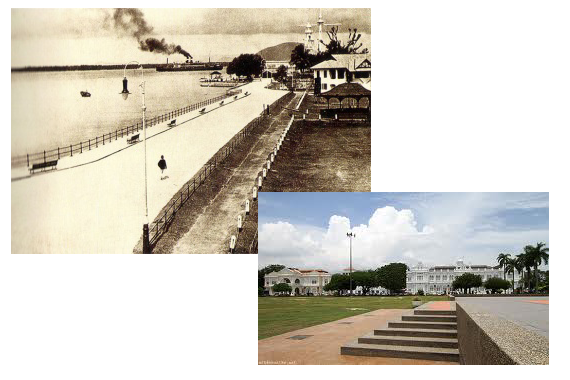
Views of heritage shop houses in George Town will offer tourist a glimpse of the Penang's British colonial days but it is at Esplanade Park that the past truly unfolds.
The seafront promenade is enclave with structures and memorial of Fort Cornwallis, Queen Victoria Memorial Clock Tower, The City Hall, The Town Hall, State Legislative Assembly Building, Cenotaph and Logan Memorial. A beautifully landscaped public park is where you can enjoy the cool breezy air.
The history of Esplanade Park begins when it is where the firing practice by the sepoy regiments and with the arrival of the British, the field was then used as a sporting arena for football, cricket and lawn bowling. The Malaysian former prime ministers Tunku Abdul Rahman and Tunku Abdul Razak reportedly have delivered fiery speeches about three decades ago.
Esplanade Park is also famous for the Chap Goh Meh celebrations. Since the 19th century, eligible young Nyonya’s would gather on the 15th Day of the Chinese New Year and throw Mandarin Oranges into the sea in hopes of finding a good suitor. This tradition is still in practiced and every year the celebration gets bigger and bigger.
At night, Esplanade Park comes to life at Hawkers are ready to serve the best local Penang cuisines to hungry diners and food enthusiasts.
The seafront promenade is enclave with structures and memorial of Fort Cornwallis, Queen Victoria Memorial Clock Tower, The City Hall, The Town Hall, State Legislative Assembly Building, Cenotaph and Logan Memorial. A beautifully landscaped public park is where you can enjoy the cool breezy air.
The history of Esplanade Park begins when it is where the firing practice by the sepoy regiments and with the arrival of the British, the field was then used as a sporting arena for football, cricket and lawn bowling. The Malaysian former prime ministers Tunku Abdul Rahman and Tunku Abdul Razak reportedly have delivered fiery speeches about three decades ago.
Esplanade Park is also famous for the Chap Goh Meh celebrations. Since the 19th century, eligible young Nyonya’s would gather on the 15th Day of the Chinese New Year and throw Mandarin Oranges into the sea in hopes of finding a good suitor. This tradition is still in practiced and every year the celebration gets bigger and bigger.
At night, Esplanade Park comes to life at Hawkers are ready to serve the best local Penang cuisines to hungry diners and food enthusiasts.
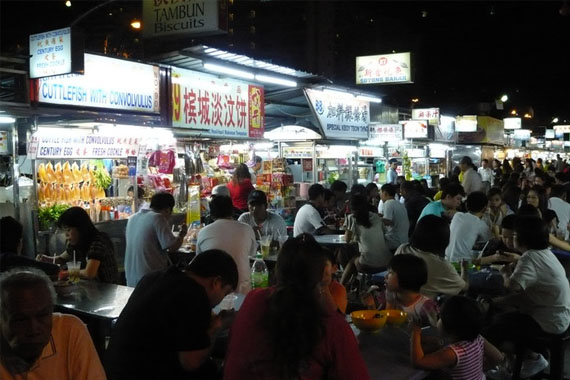
Gurney Drive is one of the popular seafront promenades in George Town. Known for their night time Hawker stalls that sells most of Penang local food and seafood’s.
The road of Gurney Drive was completed in 1936 which was previously known as the New Coast Road. It is then renamed by Sir Henry Gurney in 1952 who was the British High Commissioner in Malaya (1950-1051). rney Drive is one of the popular seafront promenade in George Town. Know for their night time Hawker food that sells most of Penang local food and seafoods. The road of Gurney Drive was completed in 1936 which was previously call the New Coast Road. It is then renamed by Sir Henry Gurney in 1952 who was the British High Commissioner in Malaya (1950-1051).
The Hawker centre at Gurney Drive is the place of conciliation of all the delicacies that once should try when in Penang. Penang curry mee, Asam Laksa, Ais Kacang, Cendol, Rojak, and Sotong Kang Kung are some of the foods serve at the Hawker centre. For food lovers, this is definitely the place that you need to visit when in Penang. The Hawker centre at Gurney Drive is the palce of conciliation of all the delicacies that once should try when in Penang. Penang curry mee, Asam Laksa, Ais Kacang, Cendol, Rojak, and Sotong Kang Kung are some of the foods serve at the Hawker centre. For food lovers, this is definitly the place that you need to visit when in Penang.
The road of Gurney Drive was completed in 1936 which was previously known as the New Coast Road. It is then renamed by Sir Henry Gurney in 1952 who was the British High Commissioner in Malaya (1950-1051). rney Drive is one of the popular seafront promenade in George Town. Know for their night time Hawker food that sells most of Penang local food and seafoods. The road of Gurney Drive was completed in 1936 which was previously call the New Coast Road. It is then renamed by Sir Henry Gurney in 1952 who was the British High Commissioner in Malaya (1950-1051).
The Hawker centre at Gurney Drive is the place of conciliation of all the delicacies that once should try when in Penang. Penang curry mee, Asam Laksa, Ais Kacang, Cendol, Rojak, and Sotong Kang Kung are some of the foods serve at the Hawker centre. For food lovers, this is definitely the place that you need to visit when in Penang. The Hawker centre at Gurney Drive is the palce of conciliation of all the delicacies that once should try when in Penang. Penang curry mee, Asam Laksa, Ais Kacang, Cendol, Rojak, and Sotong Kang Kung are some of the foods serve at the Hawker centre. For food lovers, this is definitly the place that you need to visit when in Penang.
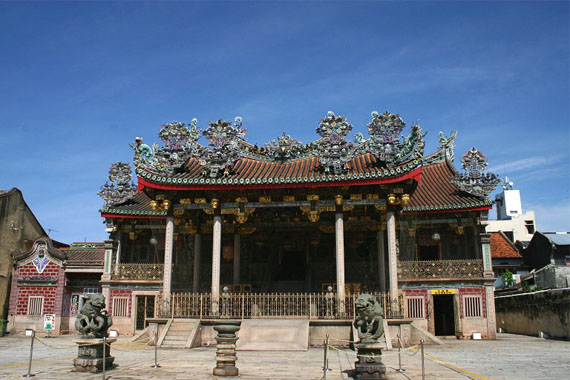
The Khoo Kongsi is a large Chinese clan house with beautifully elaborate and ornamented architecture that marks a dominant presence of the Chinese in Penang. It is famous for the grandest clan temple in the country. The clan has retained the authentic historic setting which includes an association building, a traditional theatre and the late 19th century row houses for the clan members. The Khoo Kongsi is a large Chinese clan house with beautifully elaborate and ornamented archtecture that marks a dominant presence of the Chinese in Penang. It is famouse for the grandest clan templa in the country. The clan has retained the authentic historic setting which includes an association building, a traditional theatre and the late 19th century rowhouses for the clan members.
The history was created by the clan of Leong San Tong whose forefather came from Sin Kang clan villange in Hokkien province. The Khoos were among the wealthy Straits Chinesetraders of the 17th century Malacca and early Penanf. In the 19th Century, the clan complex has resembled a miniature village with its own self-government as well as educational, financial, and social organisation. The clan temple was built in the 1906 when they were at the height of wealth and eminence in the Penang society.
Khoo Kongsi is no longer the centre of important social activities and functions that it once held. Due to its location in the UNESCO World Heritage area of Georgetown, it is a popular attraction for tourists interested in local culture.
The history was created by the clan of Leong San Tong whose forefather came from Sin Kang clan villange in Hokkien province. The Khoos were among the wealthy Straits Chinesetraders of the 17th century Malacca and early Penanf. In the 19th Century, the clan complex has resembled a miniature village with its own self-government as well as educational, financial, and social organisation. The clan temple was built in the 1906 when they were at the height of wealth and eminence in the Penang society.
Khoo Kongsi is no longer the centre of important social activities and functions that it once held. Due to its location in the UNESCO World Heritage area of Georgetown, it is a popular attraction for tourists interested in local culture.
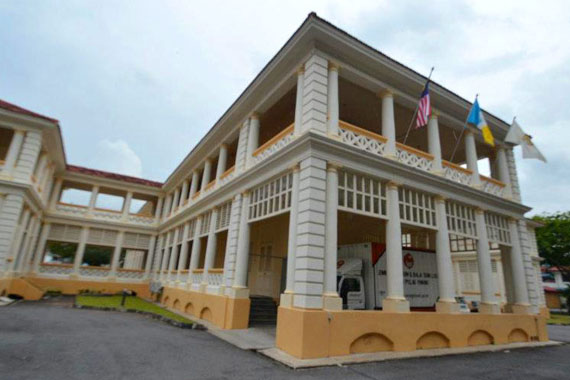
Located at Lebuh Farquhar, the Penang Museum and Art Gallery is one of the most popular attractions in Malaysia. The building which houses the museum was built in 1821 and was formerly the Penang Free School. It showcases old photographs, maps, charts, historical relics, paintings of early Penang, all of which provide an insight to Penang's history.Located at Lebuh Farquhar, the Penang Museum and Art Gallery is one of the most popular attractions in Malaysia. The building which houses the museum was built in 1821 and was formerly the Penang Free School. It showcases old photographs, maps, charts, historical relics, paintings of early Penang, all of which provide an insight to Penang's history.
The museum holds artefacts of the British colonial, Street scenes of the days of the British colonial, old transportation, history of the multiracial in Penang such as the Baba Nyonya, Malay, Indian and Chinese and their life style during the old days and also historical painting of Penang. The museum holds artefacts of the British colonial, Street scenes of the days of the British colonial, old transportation, history of the multiracial in Penang such as the Baba Nyonya, Malay, Indian and Chinese and their life style during the old days and also historical painting of Penang.
If you are into paintings and arts, The Art gallery hold many collections such as the P. Ramlee portraits, Island Retreat, Precious Earth Fosil, Moongate Monuments, FJRLAND and so much moreIf you are into painting and Art, The Art gallery hold many collections such as the P. Ramlee portraits, Island Retreat, Precious Earth Fosil, Moongate Monuments, FJRLAND and so much more.
The museum holds artefacts of the British colonial, Street scenes of the days of the British colonial, old transportation, history of the multiracial in Penang such as the Baba Nyonya, Malay, Indian and Chinese and their life style during the old days and also historical painting of Penang. The museum holds artefacts of the British colonial, Street scenes of the days of the British colonial, old transportation, history of the multiracial in Penang such as the Baba Nyonya, Malay, Indian and Chinese and their life style during the old days and also historical painting of Penang.
If you are into paintings and arts, The Art gallery hold many collections such as the P. Ramlee portraits, Island Retreat, Precious Earth Fosil, Moongate Monuments, FJRLAND and so much moreIf you are into painting and Art, The Art gallery hold many collections such as the P. Ramlee portraits, Island Retreat, Precious Earth Fosil, Moongate Monuments, FJRLAND and so much more.
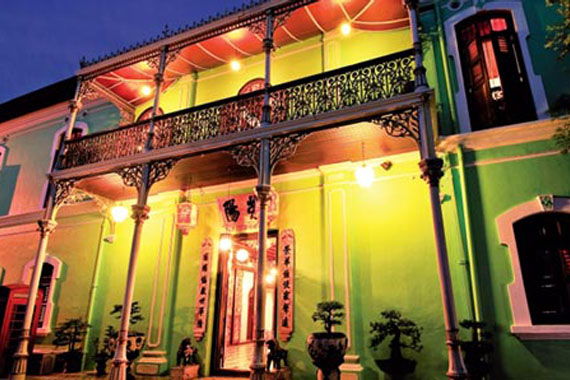
The Peranakan is also known as the Babas and Nyonyas. They were a prominent community of acculturated Chinese unique to this part of the world, especially in the Straits Settlements (Penang, Malacca and Singapore) hence its other name, the Straits Chinese. Adopting selected ways of the local Malays and later, the colonial British, the Peranakan had created a unique lifestyle and customs which had not only left behind a rich legacy of antiques but its cultural influences like cuisine and language are still evident in Penang today. The Peranakans is also known as the Babas and Nyonyas. They were a prominent community of acculturated Chinese unique to this part of the world, especially in the Straits Settlements (Penang, Malacca and Singapore) hence its other name, the Straits Chinese. Adopting selected ways of the local Malays and later, the colonial British, the Peranakans had created a unique lifestyle and customs which had not only left behind a rich legacy of antiques but its cultural influences like cuisine and language are still evident in Penang today.
The House or Mansion is a museum of the typical home of a rich Baba of a century ago. With over 1,000 pieces of antiques and collectibles of the era on display, this Baba Nyonya museum is also housed in one of Penang’s heritage mansion of eclectic design and architecture. Built at the end of the 19th century by one of local history’s famous personalities, the ‘Hai Kee Chan’ or Sea Remembrance Store had once served as the residence and office of Kapitan Cina Chung Keng Kwee. Though not a Baba himself, his Chinese courtyard house was much like a typical large Baba home of eclectic style, incorporating Chinese carved-wood panels and English floor tiles and Scottish ironworks.
Having survived the many decades of neglect and decay, the mansion has now been restored to its former glory of a stately home.The House or Mansion is a museum ofthe typical home of a rich Baba of a century ago. With over 1,000 pieces of antiques and collectibles of the era on display, this Baba-Nyonya museum is also housed in one of Penang’s heritage mansion of eclectic design and architecture. Built at the end of the 19th century by one of local history’s famous personalities, the ‘Hai Kee Chan’ or Sea Remembrance Store had once served as the residence and office of Kapitan Cina Chung Keng Kwee. Though not a Baba himself, his Chinese courtyard house was much like a typical large Baba home of eclectic style, incorporating Chinese carved-wood panels and English floor tiles and Scottish ironworks. Having survived the many decades of neglect and decay, the mansion has now been restored to its former glory of a stately home.
The House or Mansion is a museum of the typical home of a rich Baba of a century ago. With over 1,000 pieces of antiques and collectibles of the era on display, this Baba Nyonya museum is also housed in one of Penang’s heritage mansion of eclectic design and architecture. Built at the end of the 19th century by one of local history’s famous personalities, the ‘Hai Kee Chan’ or Sea Remembrance Store had once served as the residence and office of Kapitan Cina Chung Keng Kwee. Though not a Baba himself, his Chinese courtyard house was much like a typical large Baba home of eclectic style, incorporating Chinese carved-wood panels and English floor tiles and Scottish ironworks.
Having survived the many decades of neglect and decay, the mansion has now been restored to its former glory of a stately home.The House or Mansion is a museum ofthe typical home of a rich Baba of a century ago. With over 1,000 pieces of antiques and collectibles of the era on display, this Baba-Nyonya museum is also housed in one of Penang’s heritage mansion of eclectic design and architecture. Built at the end of the 19th century by one of local history’s famous personalities, the ‘Hai Kee Chan’ or Sea Remembrance Store had once served as the residence and office of Kapitan Cina Chung Keng Kwee. Though not a Baba himself, his Chinese courtyard house was much like a typical large Baba home of eclectic style, incorporating Chinese carved-wood panels and English floor tiles and Scottish ironworks. Having survived the many decades of neglect and decay, the mansion has now been restored to its former glory of a stately home.
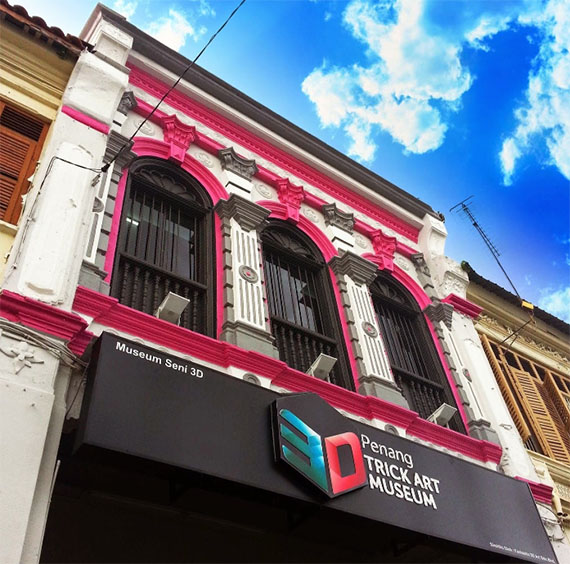
Made In Penang Interactive Museum, this 3D gallery museum officially opened on November 1, is located near the Penang pier, called a very local characteristics and alternative museums. Inside the canvas and models are hundred percent creative artists from Penang. Here, you can not only glance early Penang Port, but also expanded with 30 pieces of 3D paintings full of interesting photo, with a total of music, is bound to give you the Penang Cultural impressed. Their collection of murals utilise shades and varying contours to add to their strength as well as props to create a real-life mind trickery - on photographs, of course - for adults and kids alike.
Wall Paintings
A fleet of wall paintings depicting the early 19th century Penang port including a pop-out rickshaw that you can sit on and have your photograph taken.
Handmade jetty waterfront
20-foot long handmade jetty waterfront miniature among others by our very own Penang-born and -bred artist, Mr Khoo Chooi Hooi. Also on display are various scale-models illustrating the culturally-rich lifestyle of Penangites, both current and then.
Interactive Trick Art
New to Penang? Been wanting to rekindle old memories with Penang? Our 30-odd interactive trick art paintings will let you explore and relive Penang in a whole new dimension, from downright funny to breath-taking reminiscing.
Wall Paintings
A fleet of wall paintings depicting the early 19th century Penang port including a pop-out rickshaw that you can sit on and have your photograph taken.
Handmade jetty waterfront
20-foot long handmade jetty waterfront miniature among others by our very own Penang-born and -bred artist, Mr Khoo Chooi Hooi. Also on display are various scale-models illustrating the culturally-rich lifestyle of Penangites, both current and then.
Interactive Trick Art
New to Penang? Been wanting to rekindle old memories with Penang? Our 30-odd interactive trick art paintings will let you explore and relive Penang in a whole new dimension, from downright funny to breath-taking reminiscing.